
Innovative Partnership Aims to Future Proof Artificial Turf Pitch Maintenance
Across Europe, regulatory change is reshaping the artificial turf landscape.
With EU legislation set to phase out traditional SBR (Styrene-Butadiene Rubber) infill commonly called rubber crumb, derived from end-of-life tyres, on 3G artificial grass pitches by 2031, the industry is preparing for transition. While it remains uncertain whether identical legislation will be adopted in the UK, market direction is already shifting, albeit slowly.
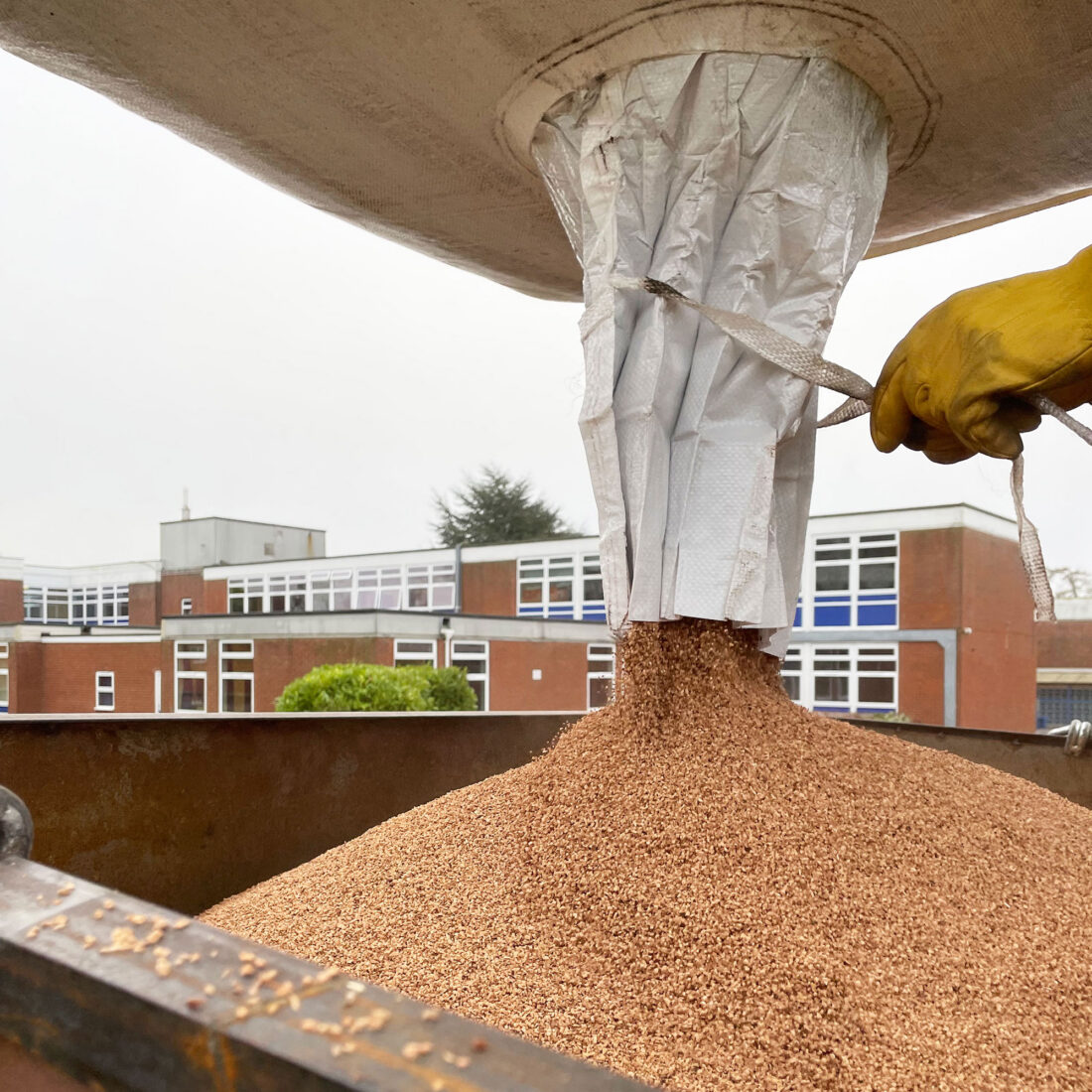
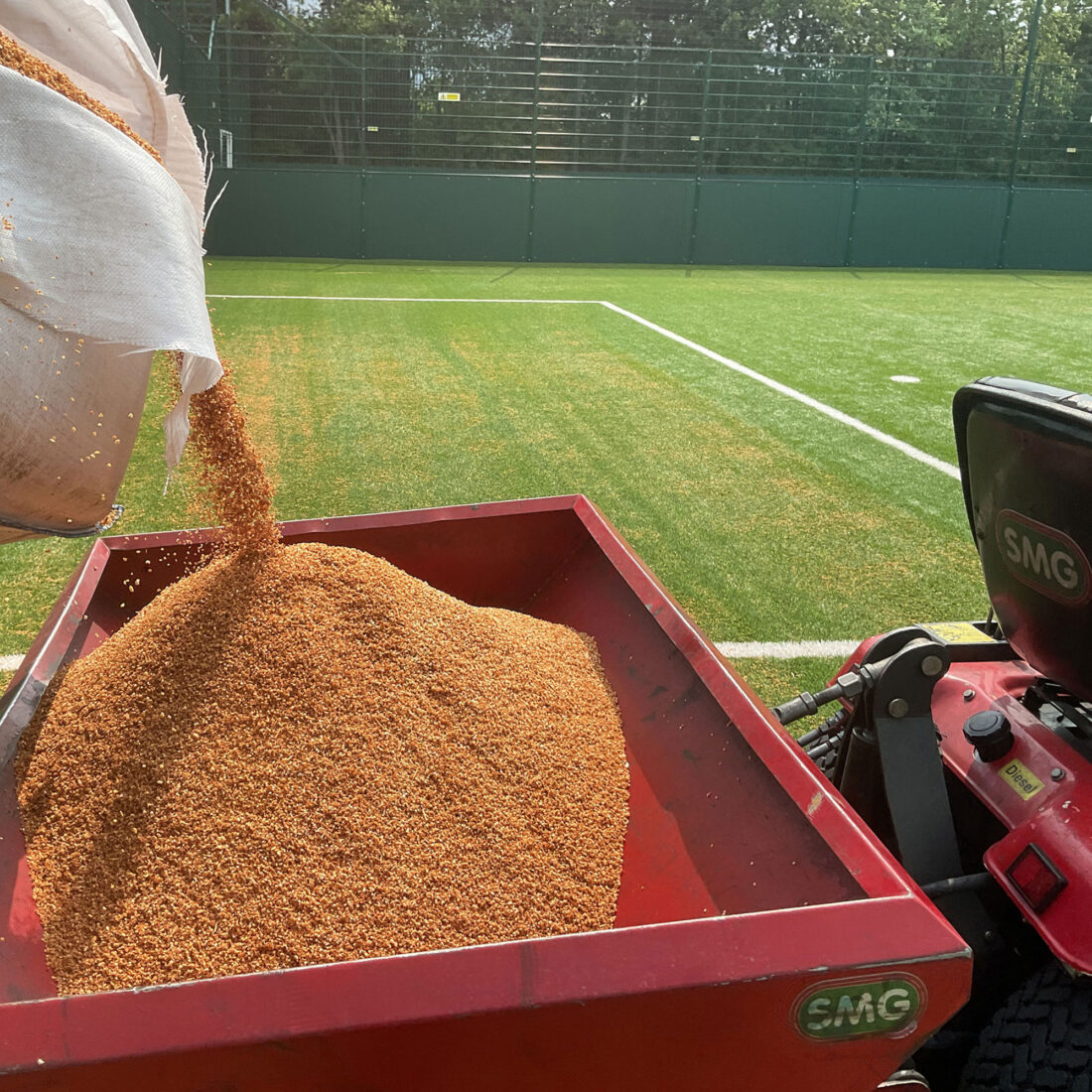
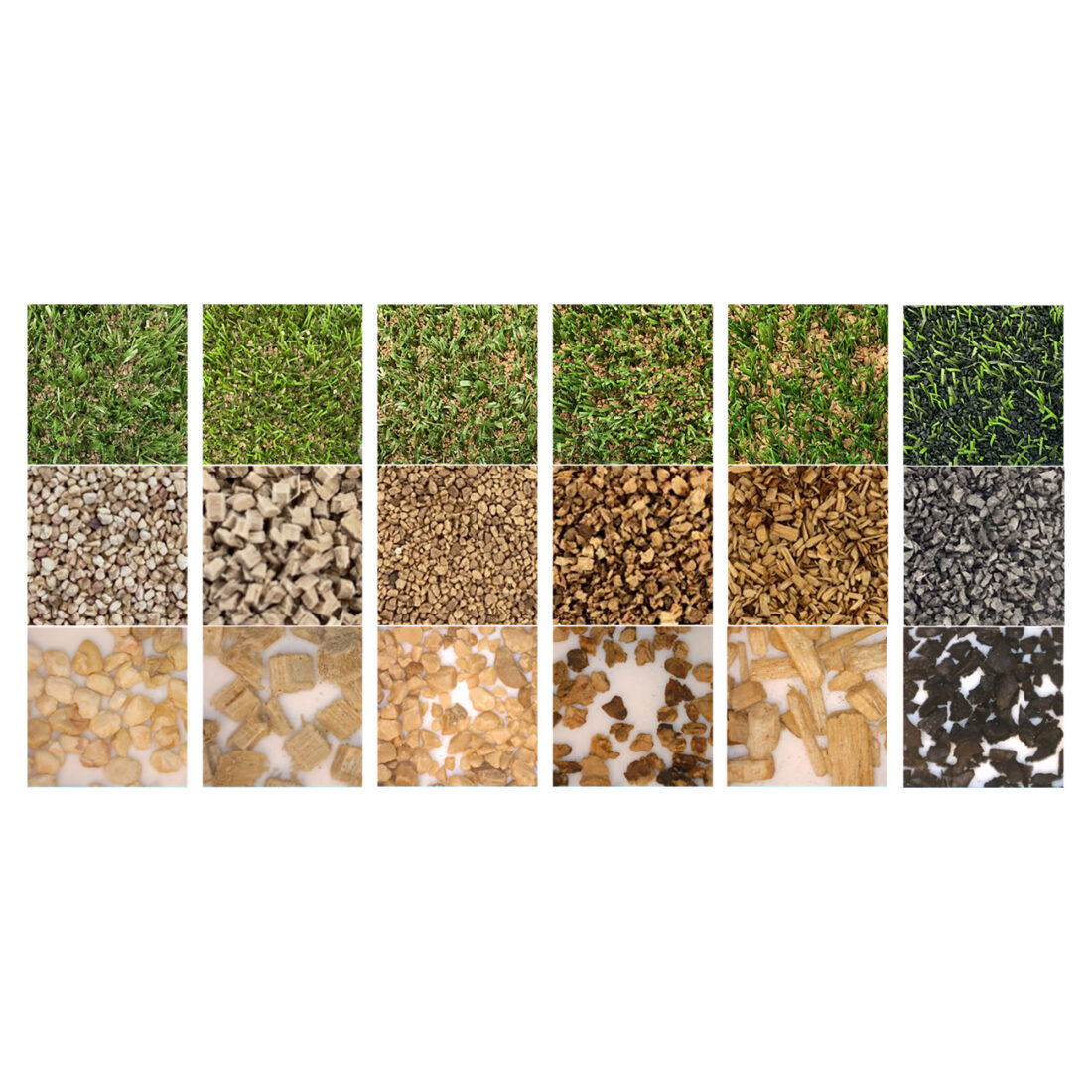
An increasing number of new installations now specify non-SBR (rubber crumb) alternatives, including cork, pine, birch wood, olive pits and corn-based materials. Sustainability considerations, perception, and future-proofing strategies are influencing procurement decisions across schools, universities, local authorities and professional facilities.
However, innovation in materials inevitably introduces new technical questions.
A Changing Material Landscape
Traditional rubber crumb infill systems have been installed and studied for decades. Their mechanical behaviour, durability characteristics and maintenance response are relatively well understood.
Organic infill systems are different.
Early analysis appears to suggest that they exhibit:
- Greater variability in particle shape and density
- Increased moisture absorption; with a greater sensitivity to frost and freezing conditions
- Potential physical degradation
- Different compaction behaviours
For facility operators, these differences carry implications for:
- Player safety
- Surface consistency
- Maintenance frequency
- Lifecycle cost forecasting
- Long-term asset protection
At present, the long-term performance behaviour of many organic infill materials under UK climatic and usage conditions is not yet fully demonstrated.
A New Knowledge Transfer Partnership
In May 2024, to address these uncertainties, Technical Surfaces launched a new Knowledge Transfer Partnership (KTP) with academic experts from the Sport Surfaces Research Group within the Sports Technology Institute at Loughborough University.
KTPs are collaborative innovation programmes part-funded by Innovate UK. They unite industry and academia to solve strategic technical challenges through structured research.
This 30-month project is led by KTP Associate Zach Morley (Sport Pitch Performance Engineer, Technical Surfaces), and focuses on developing evidence-based maintenance and performance monitoring frameworks for next-generation organic infilled artificial grass pitches.
The objective is clear: ensure that evolving sustainability choices do not compromise performance, safety or lifespan.
Moving Beyond Assumption
Building on analytical insight from previous research into rubber crumb systems, the current KTP combines:
- Standard and modified on-site performance testing
- Structured data collection under real usage conditions
- Laboratory analysis of organic infill materials
- Controlled evaluation of durability properties
Organic infills exhibit more complex behaviour than rubber crumb systems due to large variations in material properties.
One key area of investigation is particle degradation. The research team has developed an innovative method for precisely measuring how the particle size distribution of installed organic infills changes during service life.
Monitoring degradation at this level could provide insights into the rate of infill compaction and its subsequent effects on surface hardness, rotational resistance, and drainage rates.
Given that organic infills are generally considered less durable than rubber crumb, understanding breakdown mechanisms is fundamental to effective asset management.
Data-Driven Maintenance Evolution
Field testing forms a critical component of the project.
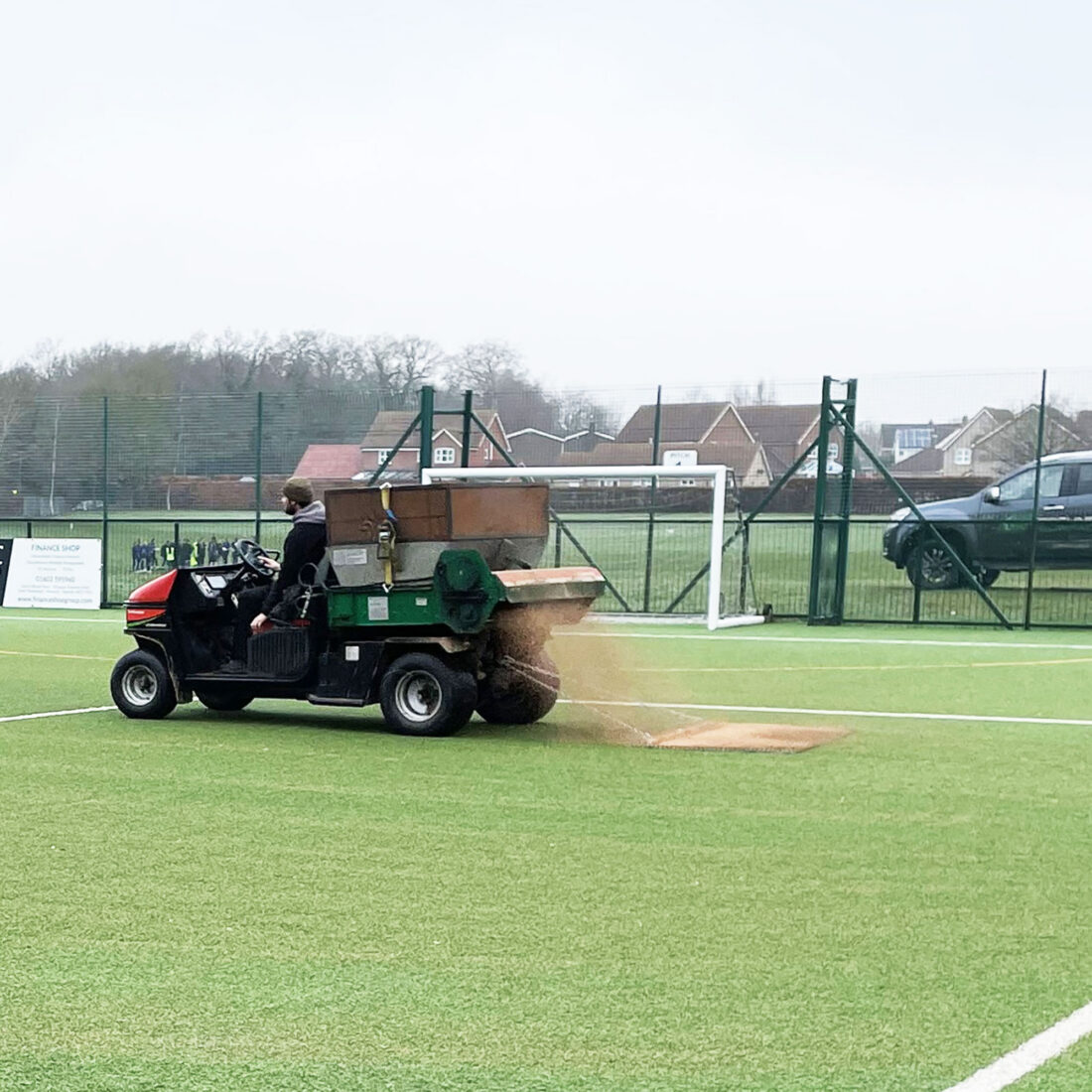
By systematically analysing how different maintenance techniques influence surface performance on non-rubber crumb systems, the team can evaluate whether traditional maintenance frequencies and methodologies remain appropriate.
The collected data enables modelling of performance degradation over time, allowing Technical Surfaces to design tailored asset management strategies specific to each organic infill system.
For venue owners, this means:
- Maintenance regimes aligned to material behaviour
- Predictable performance management
- Reduced risk of premature surface failure
- Improved lifecycle planning
Sustainability Must Be Matched by Strategy
As the artificial turf industry embraces greater sustainability practices, maintenance strategy must evolve in parallel.
Organic infill systems represent an important step in environmental progression. But they are currently a high-value item, with a higher expenditure knock-on effect for playing surface running costs.
Without robust evidence-based maintenance frameworks, the intended environmental benefits could be undermined by reduced durability or increased infill costs. Something that is under constant research and review to find the ideal solution.
This partnership ensures that innovation in materials is matched by innovation in maintenance.
Because future-proofing artificial turf does not stop at installation. It continues, year after year, through informed, data-led surface management.

Related articles