

Understanding Pitch Performance Testing
What the Numbers Really Mean.
Artificial grass pitches are sophisticated engineered systems. While they may appear visually consistent year after year, their performance characteristics are constantly changing under the influence of play, weather and time.
Performance testing provides a structured way to measure those changes. It is not simply an accreditation requirement; it is a vital management tool that allows facility owners to understand how their surface is behaving and whether maintenance interventions are keeping performance within required standards.
International and national sporting bodies developed performance criteria to replicate the behaviour of high-quality natural turf. When a surface falls outside those defined ranges, corrective action becomes necessary. However, the real value of regular testing lies in identifying gradual performance drift before it becomes a compliance issue.
Testing shifts maintenance from reactive repair to proactive asset management.
Why Performance Changes
Play performance is influenced by multiple interacting components within the system design, carpet fibres, sand and rubber infill layers, shockpads and the base construction. The Quality of installation plays a role, as does the volume and intensity of use. Climate, seasonal variation and ongoing maintenance practices further shape how a pitch behaves over time.
For third-generation (3G) systems incorporating sand and rubber infill, several variables are particularly critical. The balance between sand and rubber, the depth of infill, levels of contamination, the degree of compaction and the condition of the carpet pile all directly influence how the surface performs underfoot and under ball interaction.
These variables form the core focus of effective maintenance regimes.
Accreditation and Governance
Many competitions require formal pitch certification, with standards varying depending on level of play. Since 2001, FIFA has operated its Quality Programme, with categories including FIFA Quality Pro for professional environments and FIFA Quality for community and training facilities.
In England, The Football Association maintains a register of approved 3G pitches, including those holding FIFA accreditation.
While accreditation is often the driver for testing, the broader objective remains consistent performance and player welfare.
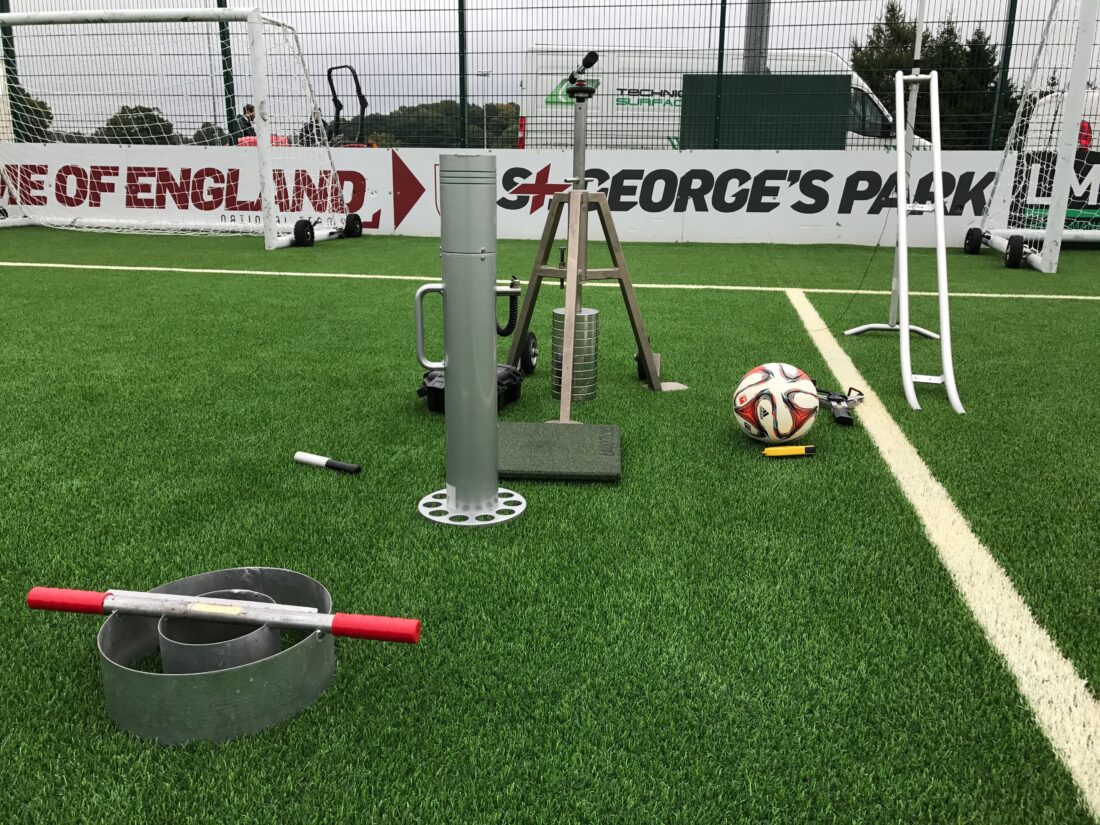
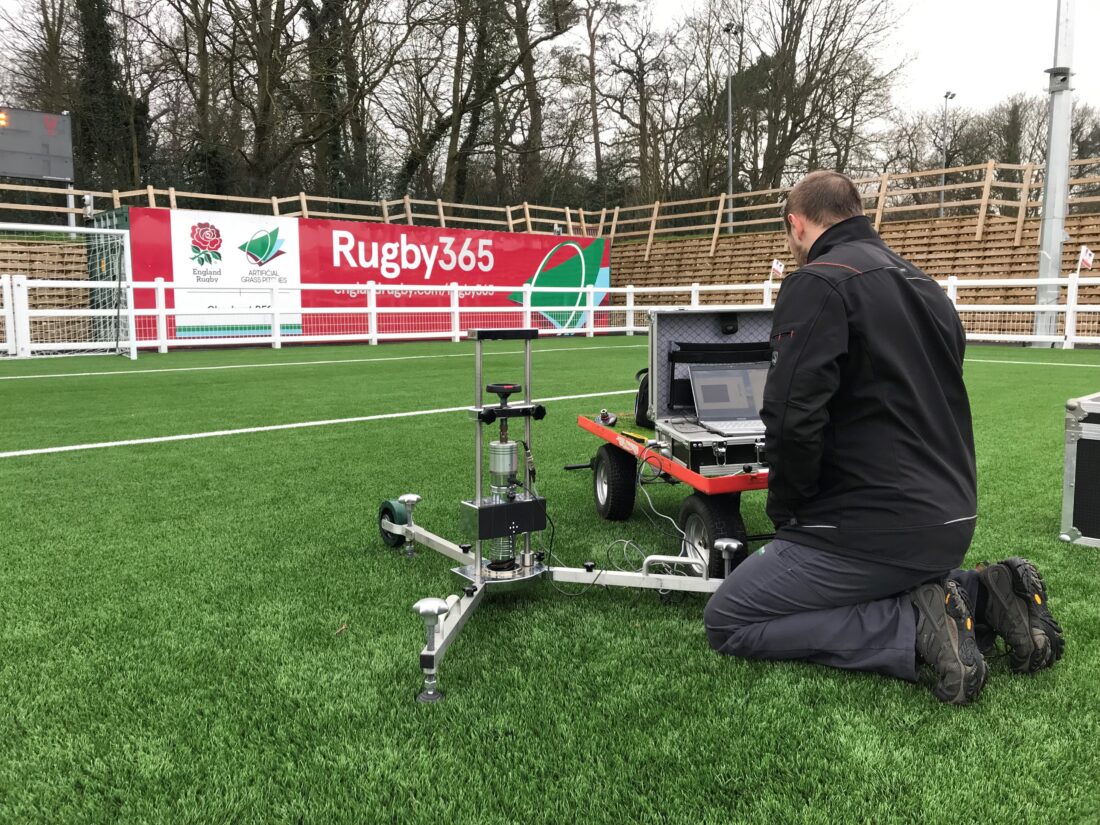
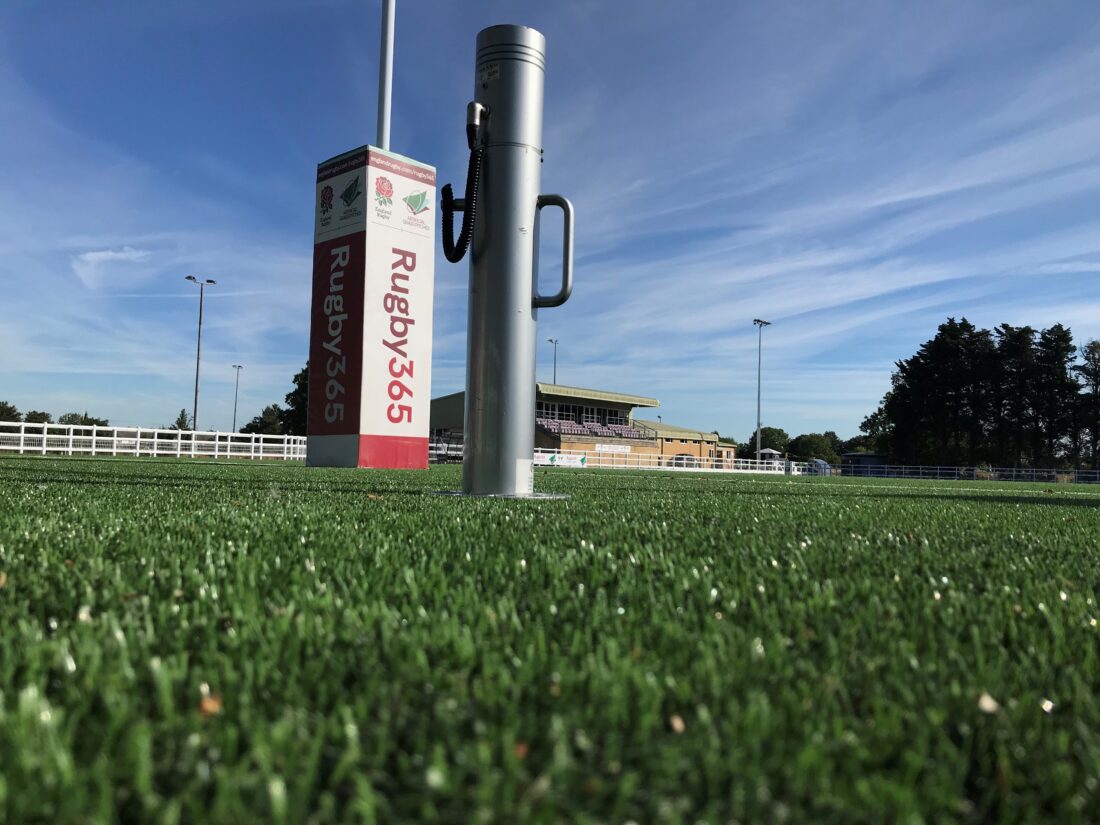
Interpreting the Key Performance Measures
Infill depth measures the total combined thickness of sand and rubber within the carpet system. Adequate depth is essential to support fibres, regulate surface performance and protect the structural integrity of the carpet.
Over time, compaction and environmental migration reduce measurable infill depth. Decompaction processes can improve infill readings on compacted surfaces, but as material is gradually lost through usage and weather, periodic rubber top-ups are required to maintain manufacturer specification, warranty and performance requirements.
Free Pile and Fibre Behaviour
Free pile refers to the height of fibre exposed above the infill layer in its current condition. This measurement is fundamental in controlling ball roll speed and distance travelled.
Flattened fibres increase ball speed and rebound, often pushing performance beyond acceptable tolerances. Regular brushing, with consistent rotation of direction, helps maintain the required free pile and stabilises playing characteristics.
Total pile height, by contrast, represents the full extended fibre length. It provides an indication of system design capacity and long-term wear rate. As pile height reduces, it signals fibre degradation and remaining carpet lifespan. Maintaining correct infill levels helps fibres wear progressively from the tips rather than along exposed lengths, extending surface longevity.
The Role of Infill Materials
Within a 3G pitch, sand forms the lower stabilising layer, preventing lateral carpet movement and supporting the fibres structurally. The rubber layer above provides cushioning and contributes significantly to shock absorption and traction.
The relationship between these layers determines how the surface feels and performs. Disturbance in that balance alters both safety and play characteristics.
Force Reduction: Managing Surface Hardness
Force Reduction measures the amount of impact energy absorbed by the surface and provides an indication of hardness. A lower reading signifies a harder surface and a potentially higher risk of impact injuries. Conversely, excessively high values suggest a surface that is too soft, increasing player fatigue and the likelihood of overuse injuries.
Force Reduction is particularly sensitive to infill compaction, contamination and infill levels. High usage environments tend to compact more quickly, increasing surface hardness. Regular Power Sweeping, PowerGrades® and controlled infill top ups are therefore essential in maintaining appropriate Force Reduction readings.
Vertical Deformation: Surface Stability
Vertical Deformation assesses how much the surface deflects under load. Excessive deformation indicates instability and unpredictability, while insufficient deformation suggests a stiff, compacted surface that may increase joint stress.
Routine decompaction maintains optimal stiffness characteristics. When deformation values decline persistently, it can indicate the need for infill top-up to restore system balance.
Ball Rebound and Ball Roll
Ball behaviour provides immediate feedback on surface condition.
Vertical ball rebound measures bounce consistency. Harder, compacted systems typically generate higher rebound values, creating unnatural playing characteristics. Controlled decompaction and fibre management helps to restore predictable ball response, reduce excessive rebound and restore predictable ball response.
Ball roll distance reflects rolling resistance across the surface. Flattened fibres and insufficient infill increase roll distance by reducing the friction the fibres exert on the ball. Regular brushing, ideally at least twice weekly, increasing proportionally with pitch usage, again helps to maintain and recover pile heights, ensures rolling resistance remains within tolerance.
Rotational Resistance: Managing Traction
Rotational resistance measures the traction between studded footwear and the surface during turning movements. It is a critical indicator of player safety.
Excessively high rotational resistance can increase stress at the knee joint during pivoting actions, elevating injury risk. Conversely, values that are too low may cause players to slip during acceleration or change of direction.
Traction is directly influenced by fibre condition and infill compaction. Regular drag brushing to lift fibres, combined with structured decompaction to loosen the performance infill, helps regulate traction properties. Equally important is the use of appropriate footwear during play to ensure optimal stud–surface interaction.
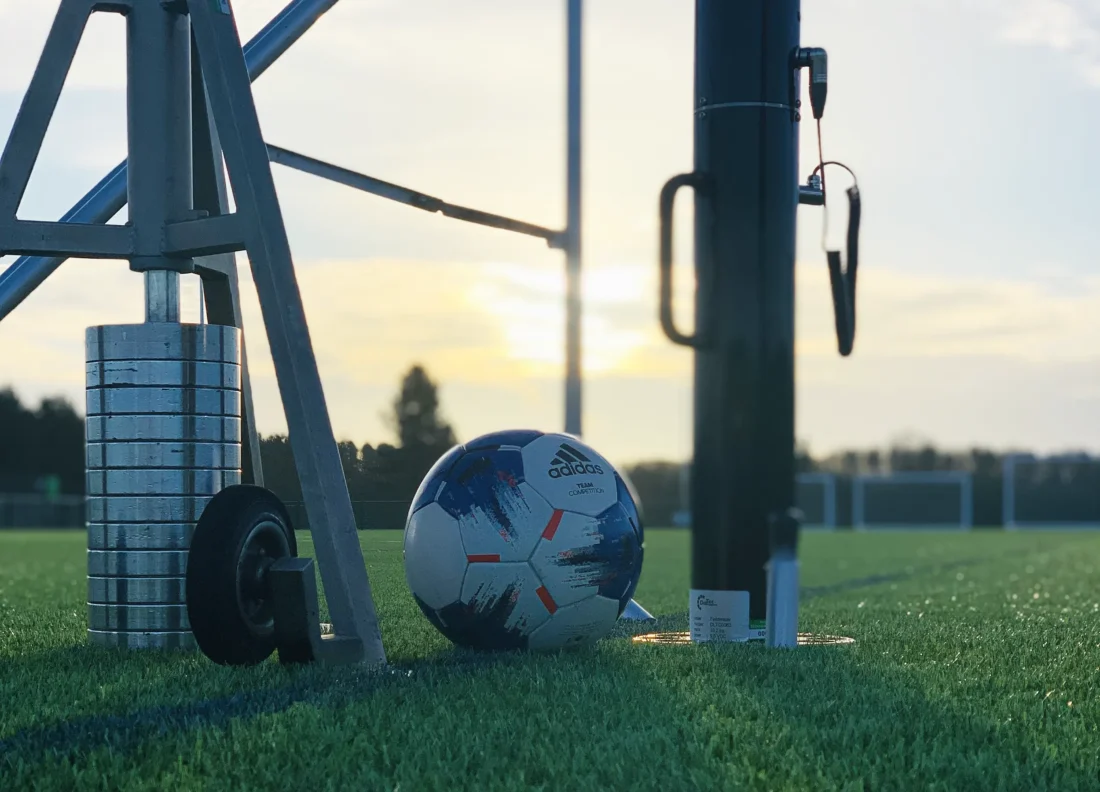
Measurement as a Management Tool
Performance testing translates invisible structural changes into measurable data. It allows facility owners to understand not only whether a surface remains compliant, but why its behaviour is changing. More importantly, it provides evidence to justify maintenance investment, supports long-term budget planning and extends asset life.
Testing does not replace maintenance, it informs it.
In high-usage environments where artificial pitches represent significant capital investment and community value, ongoing performance measurement ensures surfaces remain safe, predictable and compliant throughout their lifecycle.
Intelligent surface management is powered by data and executed with operational expertise.