
The Importance of 3G Pitch Maintenance
Historical Insight From The Vault - November 2024
By Professor Paul Fleming (reproduced in abridged form with kind permission)
Professor of Sport Surface and Ground Engineering, Loughborough University
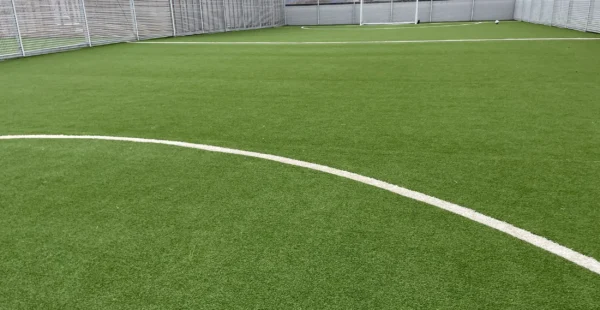
Artificial turf, or 3G surfaces, may be described as “low maintenance”. However, proper and frequent maintenance is essential to ensure optimal performance, longevity, and a return on investment.
Artificial Turf in Modern Sport
Artificial turf with rubber infill, usually termed 3rd generation (3G) artificial turf and referred to as “football turf” by FIFA, is widely used for training and competition across multiple sports, including football, both codes of rugby, American football, and lacrosse.
It is generally considered an all-weather surface, highly durable under intense use, and a significant capital investment. However, despite its robustness, adequate aftercare is critical to preserving performance and maximising life before replacement is required.
Surface Systems
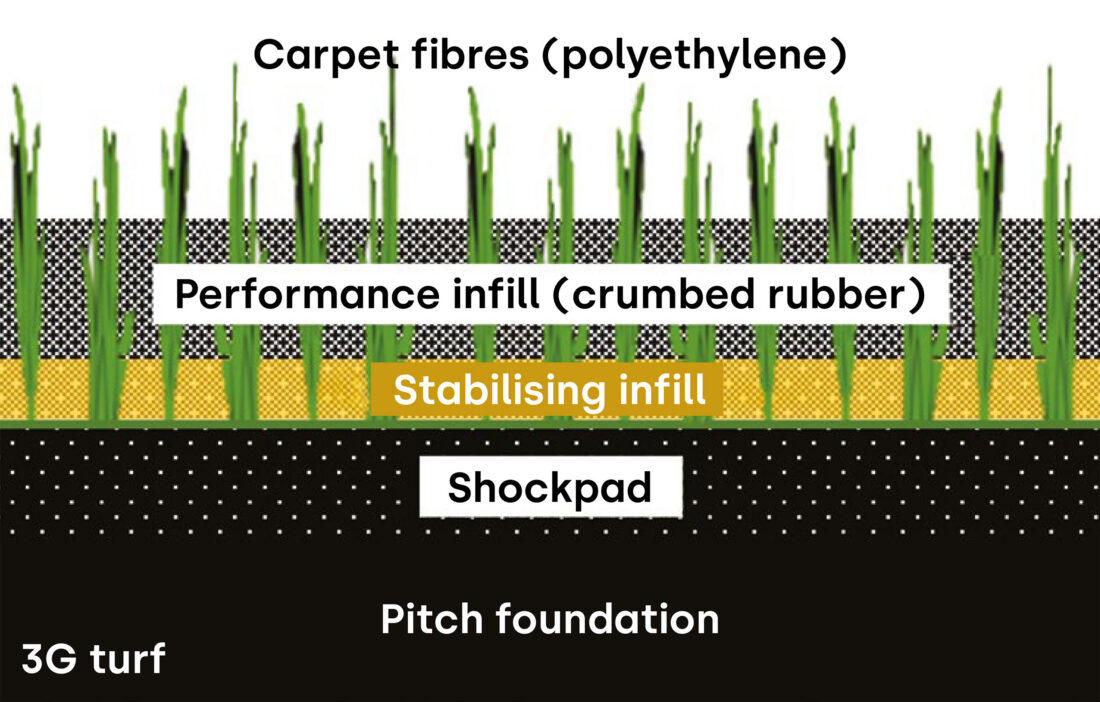
Synthetic turf carpets typically comprise a pile height (fibre length) of 35–65mm. These fibres are tufted into the carpet backing, commonly in groups of six, which gives 12 fibres of single (mono) filament strands or slit filament (fibrillated) strands. They may also appear curly (textured). The fibre yarn is manufactured from polypropylene or polyethylene polymer.
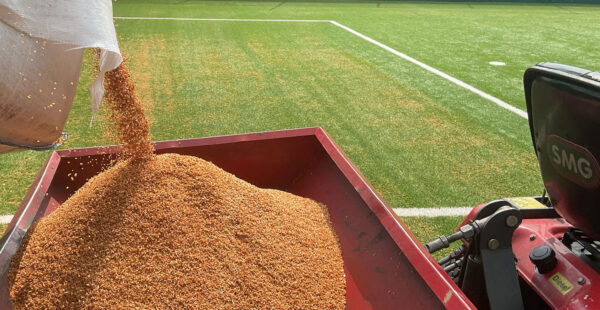
A stabilising infill layer of sand (0.2–1.2mm size range) is placed at the base, with an upper layer of performance infill made from rubber granules (0.5–2.0mm size range). Typically, one third of the fibre length protrudes above the infill layer, known as the “free pile height”.
A shockpad made of rubber or closed/open cell foam can be installed beneath the carpet, working alongside the performance infill. Together, these components form the “surface system”, designed to meet the requirements of specific sporting applications.
Once installed, maintenance often suffers due to either inexperienced contractors or a one-size-fits-all approach. In addition, limited research has historically been available to explain how 3G systems degrade or how maintenance interventions can improve performance.
Maintenance Methods
Maintenance techniques can generally be grouped into four categories:
- Grooming / brushing
- Cleaning
- Decompaction
- Infill top-ups
These techniques have largely been developed empirically in response to field observations.
The purpose of regular maintenance includes:
- Maintaining aesthetic appearance
- Ensuring an even, consistent and safe playing surface
- Complying with manufacturer or installer warranties
- Reducing the need for costly repairs or early replacement
Neglecting aftercare can quickly undermine the benefits of artificial turf. Given that installation represents a significant investment, revenue generation through usage is essential to ensure a return on investment and to build a sinking fund for eventual resurfacing (carpet replacement).
Without proper maintenance, particularly in the early life of a pitch, deterioration can accelerate significantly. In some cases, this may reduce lifespan from an expected 7–10 years to as little as five years especially for heavily used pitches (50hrs+ per week).
Specialist Research
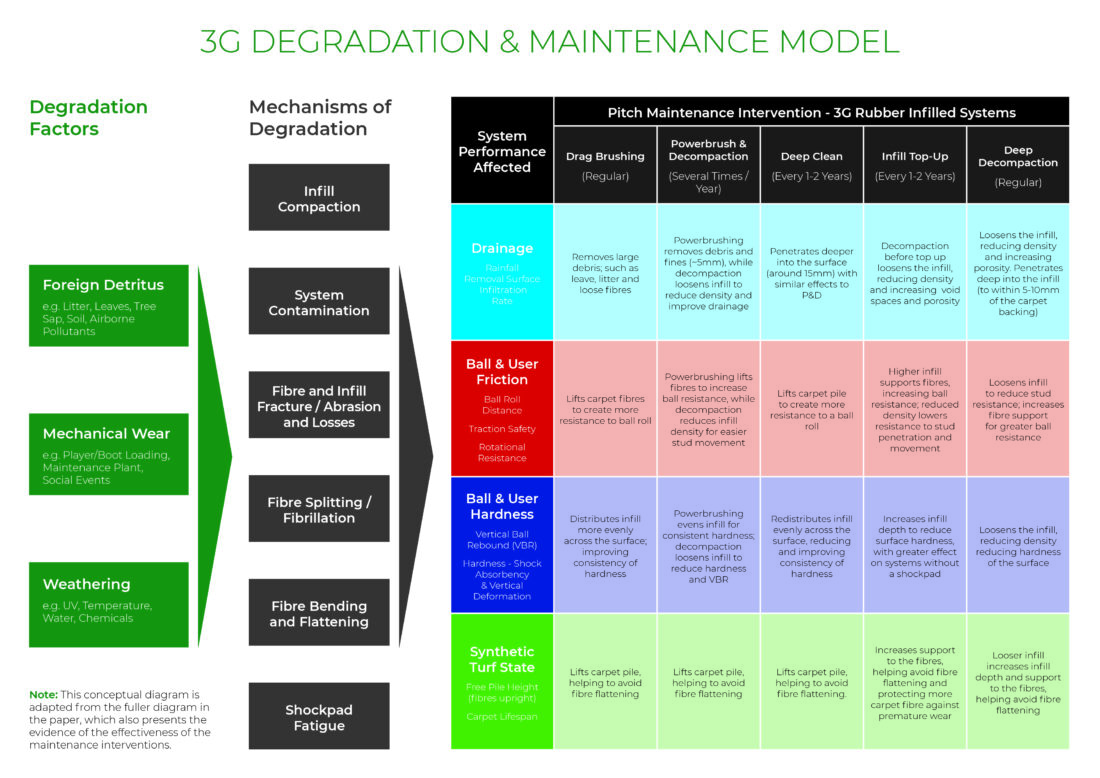
Over the past 10 years, Loughborough University’s Sport Surfaces Research Group (SSRG) has undertaken extensive research to measure and quantify the effectiveness of maintenance techniques, culminating in a degradation & maintenance model for 3G artificial turf (Fleming et al., 2020).
This work was conducted in collaboration with ourselves (Technical Surfaces).
An example of specialist maintenance machinery that combines grooming, cleaning, and decompaction techniques demonstrates how integrated maintenance systems can improve surface condition.
Data Findings
The research utilised detailed field trials conducted between 2011 and 2018, alongside a database of approximately 750 3G pitch inspections and interventions.
Key findings include:
- Regular drag brushing maintains consistent infill depth and fibre free pile height
- There is a clear relationship between free pile height and ball roll performance
- Ball roll is often the first performance metric to fail if maintenance is inadequate
- Older pitches require more frequent brushing to maintain performance
Further trials showed:
- Powerbrushing significantly improves ball rebound performance
- Decompaction reduces surface hardness by loosening compacted infill
- Monthly powerbrushing is important for cleaning and removing debris that can affect drainage and encourage biological growth
More intensive interventions include deep cleaning, deep decompaction, and full infill removal and reprocessing for heavily worn pitches.
Research also confirmed measurable infill loss over time, with cumulative top-ups of around 30 tonnes over a six-year period for a full-size pitch.
Sustainability Considerations
Europe has committed to phasing out microplastics (including SBR rubber) in artificial turf systems by 2031, with the UK currently reviewing its position and mitigation strategies.
Mitigation measures include:
- Pitch perimeter containment systems
- Infill capture grates
- Drain interceptors
- Cleaning of maintenance machinery after use
This has driven increased adoption of organic infills such as cork and wood-based products. However, these alternatives typically require more intensive maintenance, and limited quantitative evidence currently exists on their long-term performance and cost implications.
Read how Technical Surfaces and Loughborough University are conducting a Knowledge Transfer Partnership (KTP) on how the organic infills interact with artificial sporting surfaces.
Performance Modelling and Pitch Management
The degradation and maintenance model developed through this research enables operators to predict how maintenance affects key performance metrics such as:
- Ball roll distance
- Ball rebound
- Surface hardness
- Traction
This allows maintenance strategies to be planned in advance and helps operators forecast when infill top-ups or more invasive interventions may be required.
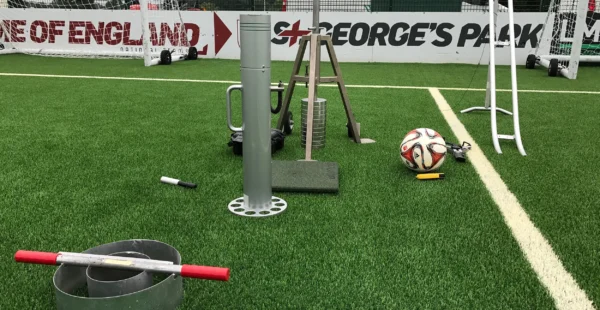
Regular monitoring of pitch condition remains essential, particularly for facilities registered for competitive play or compliance with governing body standards. In England, FA-registered pitches typically require periodic testing every three years to maintain compliance.
Conclusion
While artificial pitches are often described as low maintenance, evidence clearly shows that they require structured, frequent, and informed upkeep.
When properly maintained, 3G surfaces can deliver consistent performance and withstand intensive use of 50+ hours per week, providing a lower cost per usage hour compared to natural grass. However, this benefit is only realised through proactive maintenance and lifecycle management.

Related articles