

What Artificial Surface Am I Really Playing On?
Most players step onto a pitch without ever really thinking about what it’s made from
You might hear terms like 2G, 3G, or even 4G, but these labels don’t always tell the full story.
The reality is simple: Artificial pitches are defined by what they’re made of, how they look, and how they behave.
Understanding that helps you quickly identify the surface you’re playing on, and more importantly, how the game will feel.
Why It Matters
Different surfaces aren’t just built differently, they play and perform differently.
Knowing your surface helps you:
- Understand how the ball will move
- Adjust your playing style
- Choose the right footwear
- Recognise when a pitch isn’t performing properly
And crucially: Not every surface is designed for every sport, but many are used for more than one.
The Main Types of Artificial Sports Surfaces
2G (Second Generation)
What it’s made from
- Short synthetic fibres
- Sand infill (or sometimes very little infill)
- No rubber crumb
What it looks like & how it plays
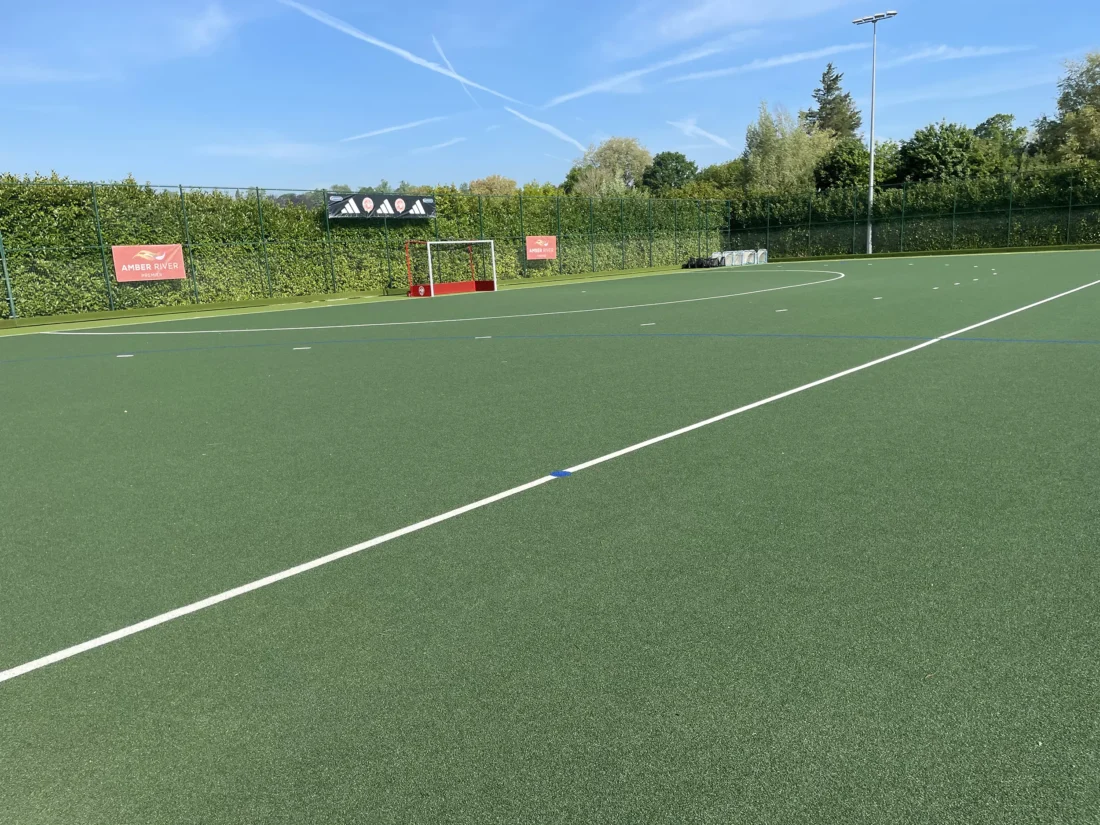
A 2G surface has a tight, almost carpet-like appearance, with short fibres that sit upright and are clearly visible across the pitch. Depending on the type, you may notice a light sandy colouring, particularly on sand-filled versions, but you won’t see any black rubber pellets. Underfoot, the surface feels firm and compact, offering very little give compared to longer-pile systems. This creates a fast, responsive playing experience where the ball travels quickly and consistently across the surface. The lack of cushioning means the game feels sharper and more precise, but also less forgiving on impact.
Best suited for
Hockey // Tennis // MUGAs
Can other sports be played on it?
Football can be played on 2G, but it behaves very differently:
- Ball moves faster and stays lower
- Less grip for turning
- Harder impact on joints
In short: Great for precision sports like hockey, less forgiving for football.
2G Variations; Sand-Dressed vs Sand-Filled
2G Sand-Dressed Surface
Has a light sand layer with more fibre exposed. It looks greener with more visible fibres and as a result plays faster and smoother
Sand-Dressed Surfaces; Read More
2G Sand-Filled Surface
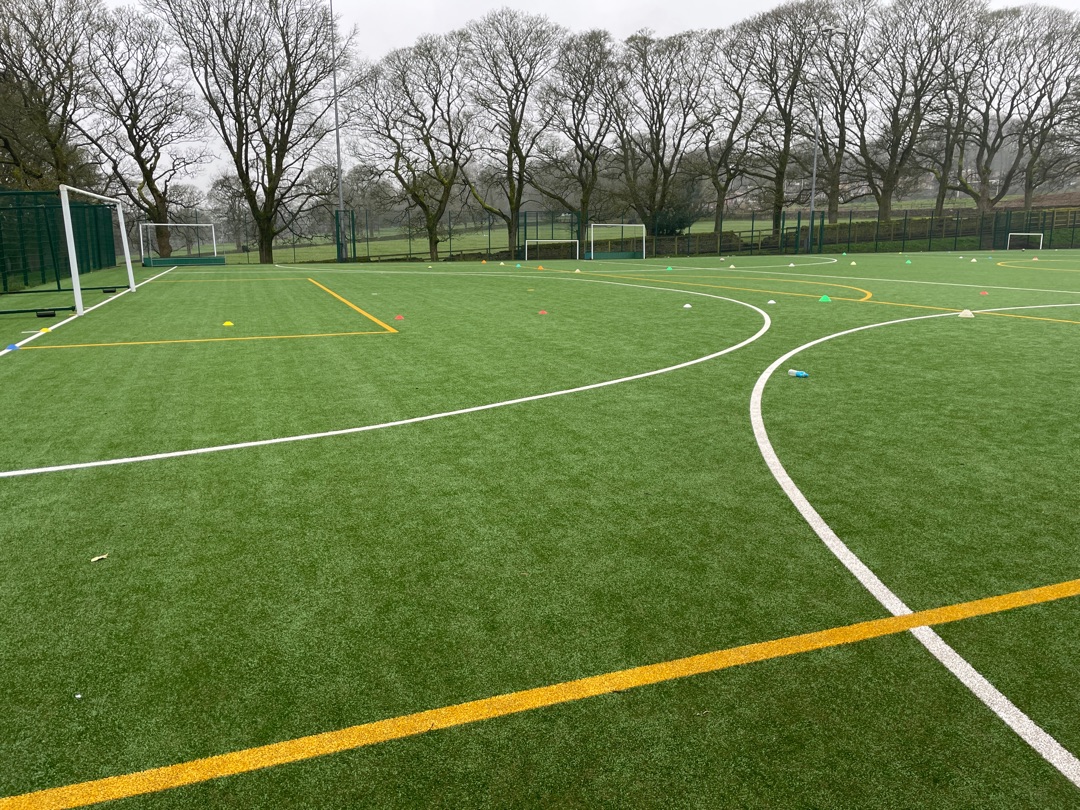
The sand fills most of the fibre height, so it looks more “sandy” and compact. This difference means it plays slightly slower but is a very durable surface.
3G (Third Generation)
What it’s made from
- Longer synthetic grass fibres (40–60mm)
- Sand base layer
- Rubber crumb infill (black pellets)
What it looks like & how it plays
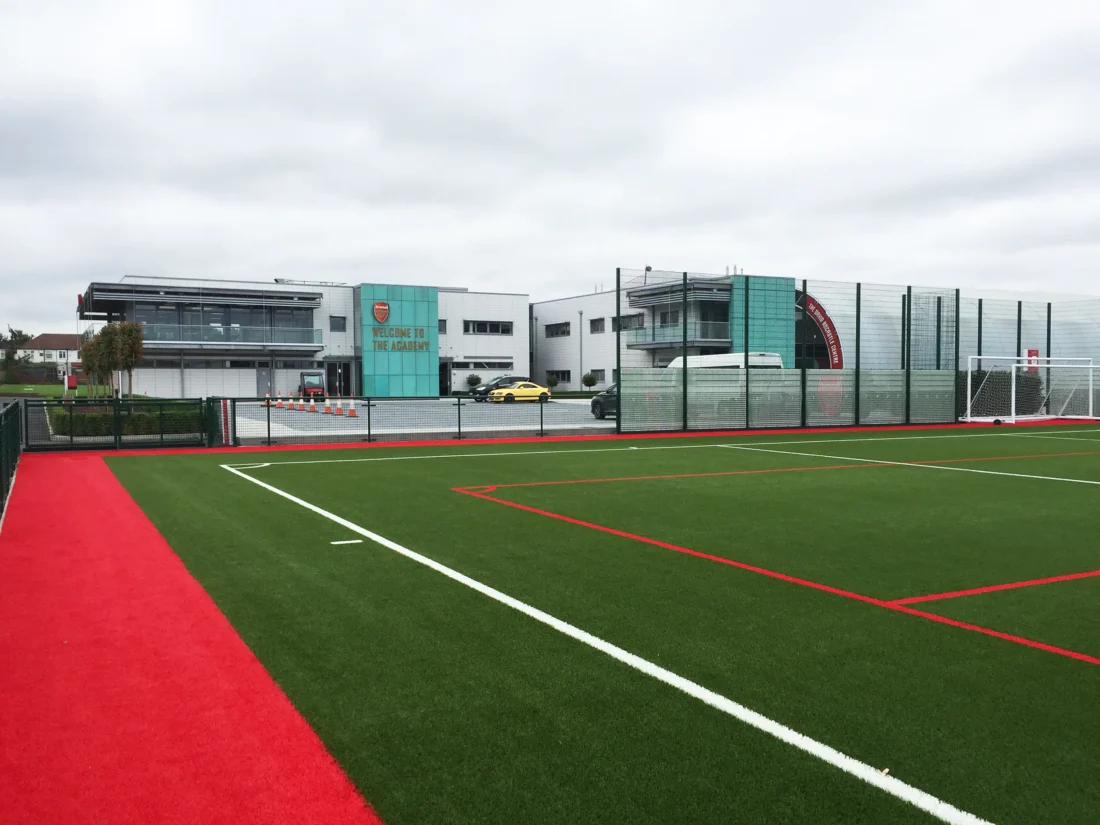
A 3G pitch is easy to recognise by its longer, more natural-looking grass fibres and the presence of black rubber crumb sitting between them. The surface often looks fuller and softer than 2G, with the fibres moving more freely underfoot. During play, the rubber infill is frequently disturbed, which is why it tends to stick to boots, socks, and clothing. This construction gives the pitch a noticeably cushioned feel, helping to absorb impact and reduce stress on joints. The ball rolls more like it would on natural grass, with a balance of speed and control, while the added grip allows for sharper turns, acceleration, and more dynamic movement.
Best suited for
Football // Rugby (with the correct specification) // High-use sports facilities
Can other sports be played on it?
Hockey can be played on 3G, but:
- Ball roll is slower and less consistent
- Surface grip affects ball control
- Not suitable for competitive hockey
In short: Ideal for football, but not for sports that rely on a fast, smooth ball roll.
So… What Is “4G”?
What it’s usually made from
- Similar structure to 3G
- Long fibres
- Alternative infill (reduced rubber, sand blends, or non-rubber materials)
- or No Infill
What it looks like & how it plays
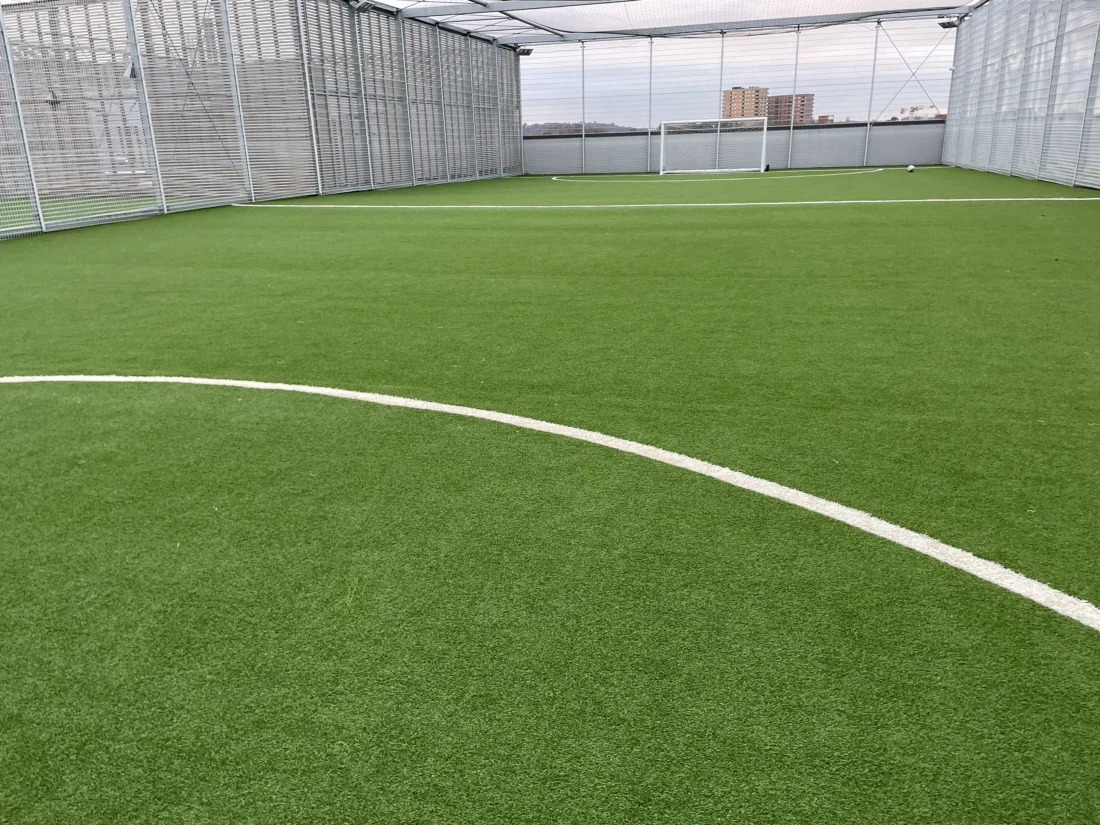
Pitches described as “4G” often look very similar to 3G at first glance, with long fibres that replicate the appearance of natural grass. However, they tend to appear cleaner, with less visible rubber crumb on the surface. In some cases, the infill is reduced or replaced with alternative materials, which slightly changes both the look and feel. Underfoot, these surfaces can feel a little firmer than traditional 3G, while still providing a consistent and controlled playing experience. Players often notice less rubber transfer during and after use, but in terms of performance, they behave very much like a well-maintained 3G pitch.
The reality
Most “4G” pitches are:
- Still technically 3G systems
- Just with different infill or fibre design
Best suited for
Football // Schools // High-use facilities
Water-Based Hockey Pitches
What they’re made from
- Short, dense fibres
- No infill
- Surface is irrigated with water
What it looks like & how it plays
Water-based surfaces have a very smooth, uniform appearance, especially when wet, often taking on a slightly glossy finish under light. Without sand or rubber infill, the fibres sit tightly together, creating a clean and uninterrupted playing surface. Once irrigated, the layer of water reduces friction significantly, allowing the ball to glide quickly and evenly across the pitch. The result is an extremely fast and consistent game, where precision and control are essential, and even small variations in movement can make a noticeable difference.
Best suited for
Elite hockey
Water Based Surfaces; Read More
Polymeric (Rubber) Surfaces
What they’re made from
- Solid rubber or polyurethane layers
- No fibres or infill
- What it looks like & how it plays
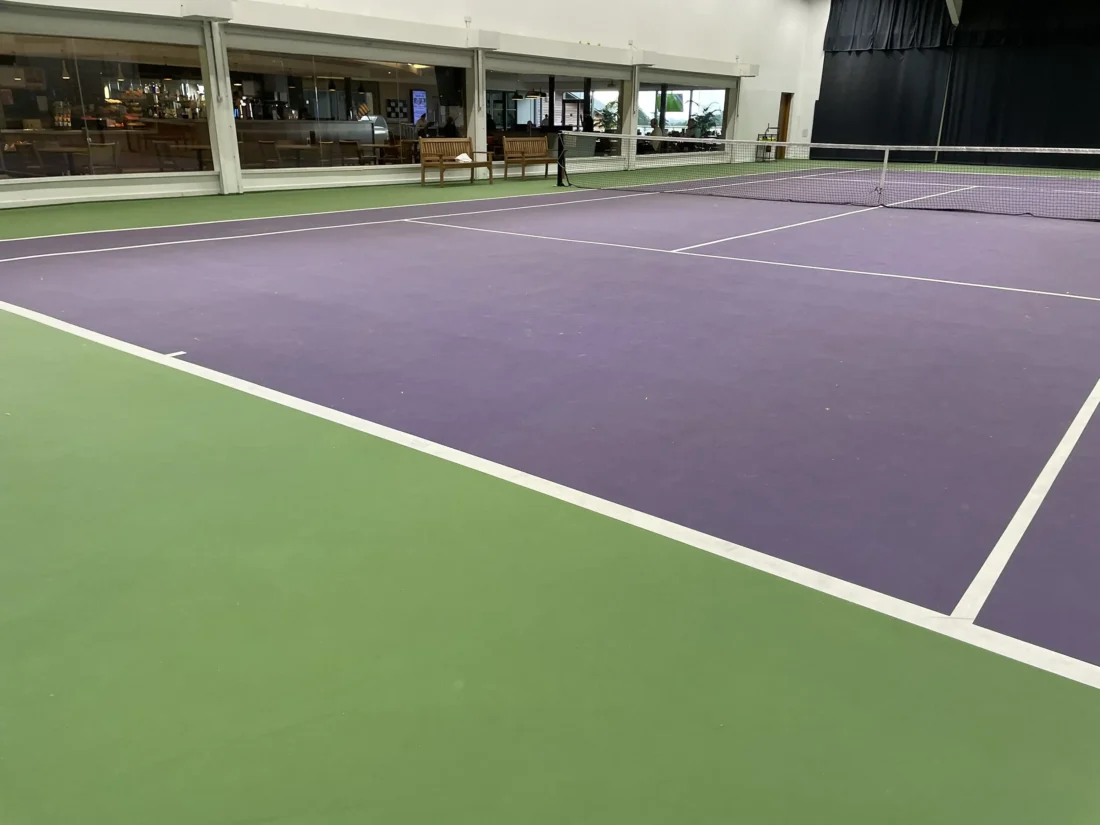
Polymeric surfaces are instantly recognisable by their smooth, uniform finish, with no visible fibres or loose material on the surface. They are typically a solid colour, often red, green, or blue, and have a slightly textured feel for grip. Underfoot, they provide a firm yet cushioned experience, absorbing impact more effectively than hard courts while still offering a stable and predictable platform. The ball response is consistent, with reliable bounce and traction, making them well suited to multi-sport use where durability and control are key.
Best suited for
Athletics // Basketball // Tennis // Multi-sport
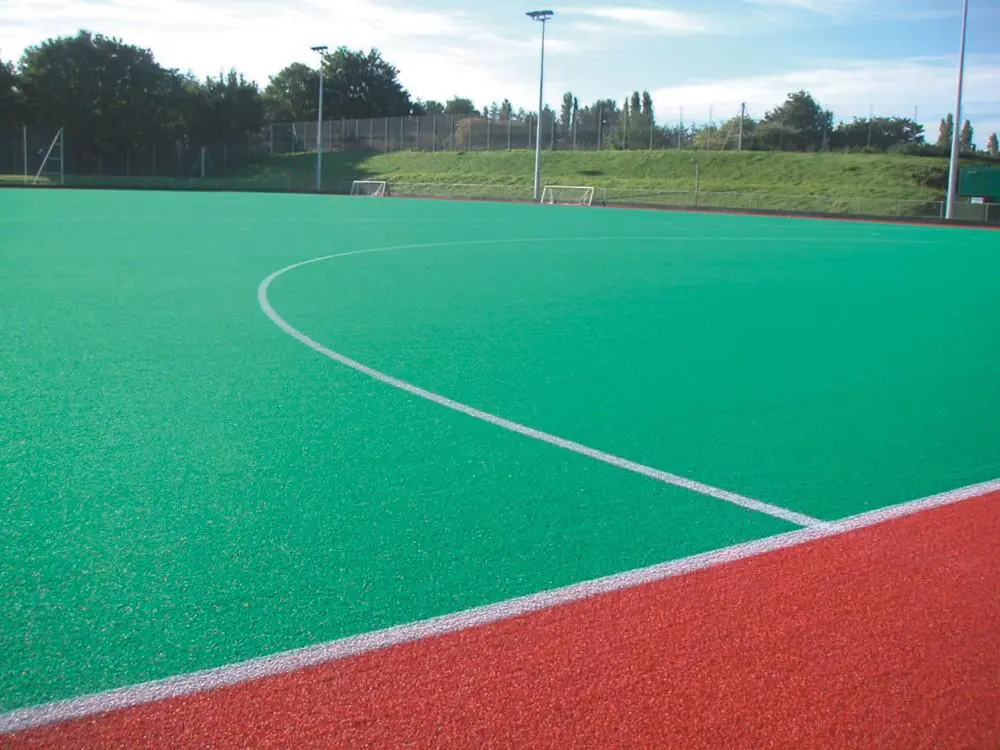
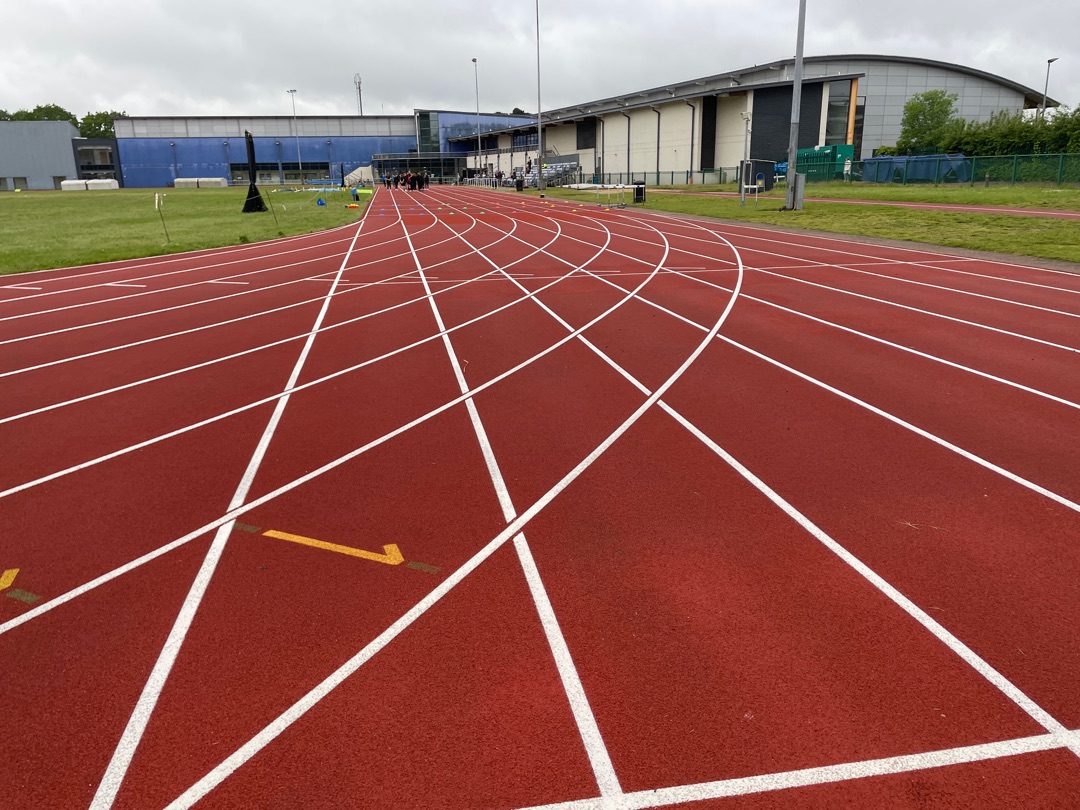 Polymeric
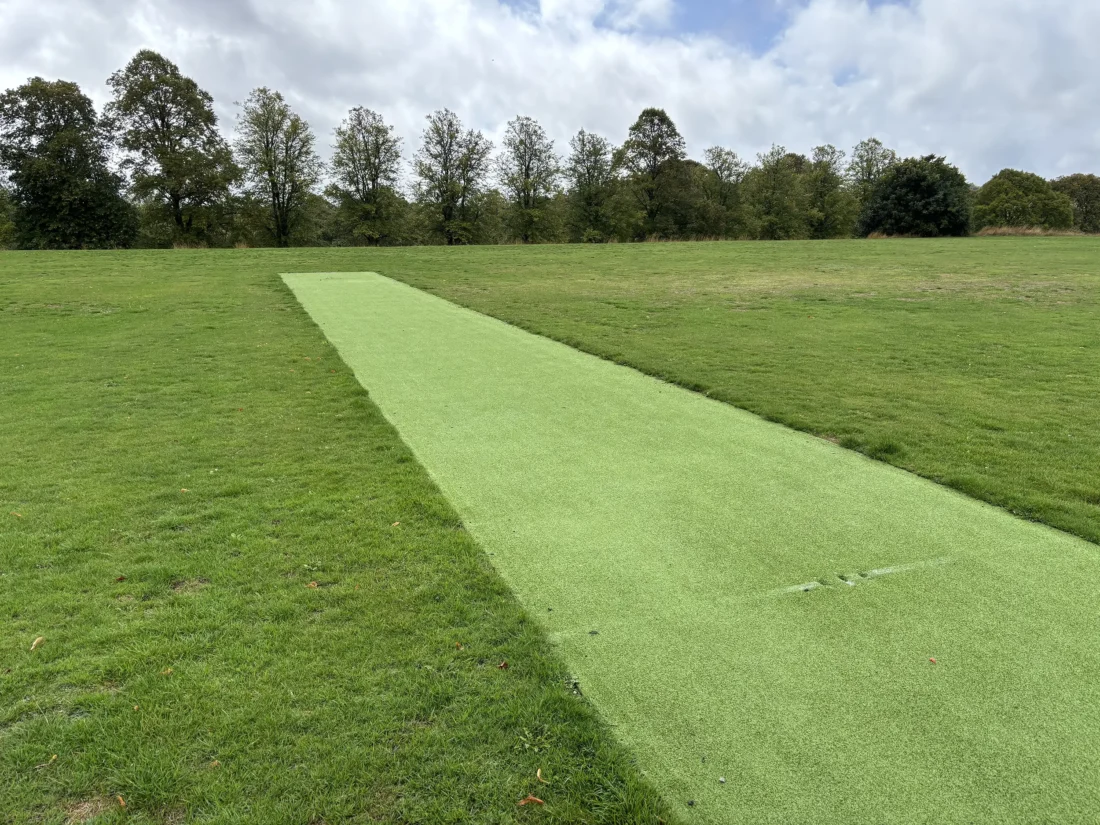 Cricket
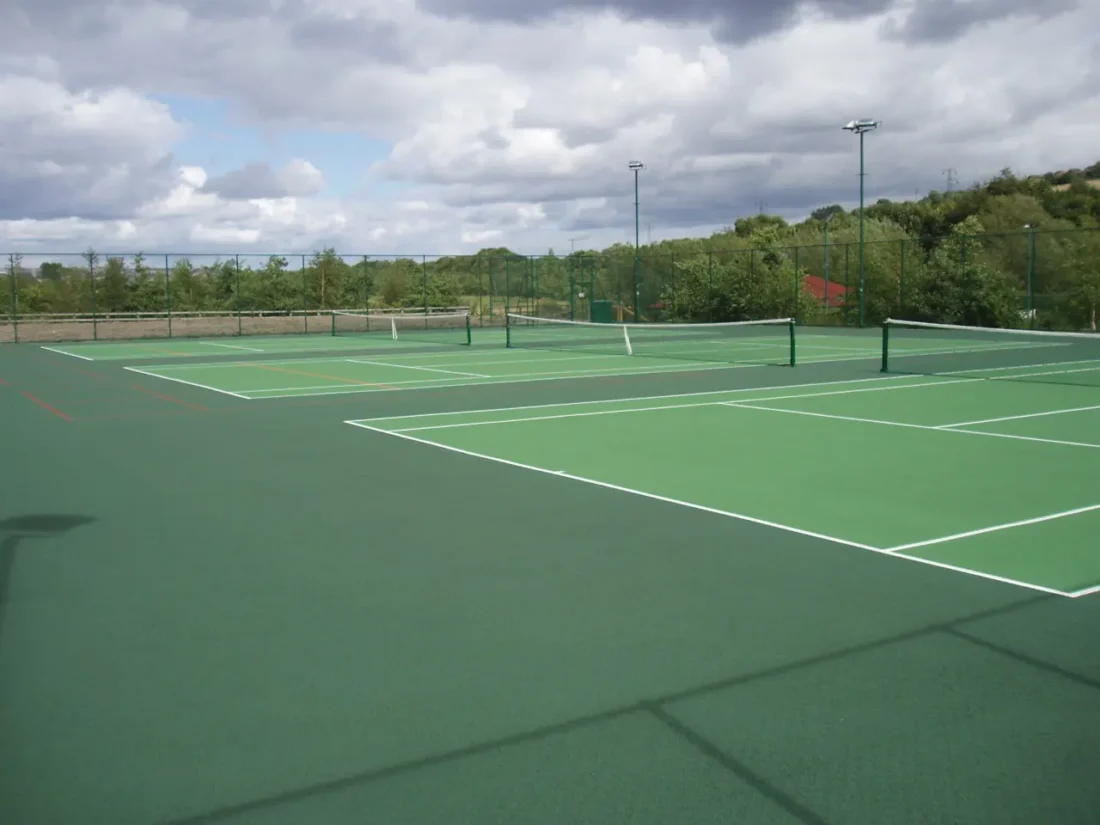 Tarmac
 Acrylic
Artificial Cricket Pitches
What they’re made from
- Synthetic carpet (needle-punch or woven)
- Sand-filled or laid directly onto a solid base (tarmac or concrete)
- Shockpad or underlay in some systems
What it looks like & how it plays
Artificial cricket pitches are usually easy to identify as a distinct strip laid over a larger surface, often a different colour to the surrounding area. The surface itself is short and dense, similar in appearance to a 2G system, but typically more compact and uniform. There is no visible rubber infill, and in many cases, the fibres are tightly bound to create a consistent playing surface.
In play, the surface is designed to produce a predictable and repeatable ball bounce. It tends to play faster than natural turf wickets, with less variation in bounce and pace. Because of its firmness, the ball comes onto the bat quickly, which supports batting practice and recreational play, but doesn’t fully replicate the nuances of a natural grass wicket.
Best suited for
Cricket (training and recreational play)
Tarmac Courts
What they’re made from
- Asphalt surface laid over a stone base
What it looks like & how it plays
Tarmac courts have a raw, hard-wearing appearance, typically dark in colour with painted line markings applied directly to the surface. There are no fibres, coatings, or infill materials, just a solid, compact layer. Underfoot, it feels extremely firm, offering no cushioning and very little shock absorption.
In play, the ball moves quickly and bounces sharply, which creates a fast-paced environment. However, the hardness of the surface means higher impact on joints, especially over longer periods of play, and can make it less forgiving for regular or high-intensity use.
Best suited for
Basketball // Tennis // Recreational school use
Acrylic Courts
What they’re made from
- Asphalt or concrete base
- Acrylic coating system (multiple layered finish)
What it looks like & how it plays
Acrylic courts have a much more refined and uniform appearance compared to raw tarmac, usually finished in bright, consistent colours with clearly defined markings. The acrylic coating adds a slightly textured surface, improving grip and visual clarity.
In terms of play, acrylic surfaces still feel firm underfoot, but the added coating provides better traction and a more controlled ball response. The bounce is consistent and predictable, making it ideal for sports that rely on accuracy and repeatability, such as tennis and netball. While still a hard court, it offers a more controlled and higher-quality playing experience than uncoated tarmac.
Best suited for
Tennis // Basketball // Netball // Schools and leisure facilities
In Summary
Artificial surfaces aren’t about what sounds newest, they’re about how they’re built and what they’re designed to do.
- 2G = short, firm, fast → best for hockey and precision sports
- 3G = long, cushioned, grippy → best for football and contact sports
- “4G” = marketing term → typically a variation of 3G
- Water-based = ultra-smooth, high-speed → elite hockey performance
- Polymeric = solid, cushioned surface → multi-sport and high durability
- Cricket systems = short, compact strips → consistent bounce for training
- Tarmac = hard, fast, unforgiving → recreational use
- Acrylic = hard but controlled → consistent ball sports like tennis
And while many sports can be played across these surfaces: They are always designed with a primary sport in mind, and performance will vary outside of that.
One Final Thing
Without proper care:
2G & 3G surfaces; Fibres flatten, infill compacts or contaminates, and ball performance becomes inconsistent
Water-based pitches; Surface performance drops without correct irrigation, and debris can affect ball roll
Polymeric surfaces; Dirt and organic build-up reduce grip and surface consistency over time
Cricket pitches; Surface wear, contamination, and base issues can affect bounce and safety
Tarmac courts; Cracks can develop, moss and algae can build up, and surface grip reduces
Acrylic courts; Coatings wear down, grip reduces, and contaminants affect play quality
With proper maintenance:
- Surfaces perform as designed
- Lifespans are extended
- Player safety is improved
Because regardless of the surface; performance always comes back to condition.
Not Sure What You’re Playing On?
If you’re still unsure what surface you’ve got, or it just doesn’t feel right anymore, it’s worth finding out.
At Technical Surfaces, we help organisations identify, maintain, and extend the life of their artificial sports pitches.
Because when you understand the surface, you understand the game.